
The Ultimate Guide to Writing Reels Scripts That Keep Viewers Watching
Writing a script for a 30-second video might seem simple, but it is actually harder than writing a 10-minute YouTube video. In short-form content, every single word counts. If you ramble or fail to structure your speech, viewers will swipe away immediately.
High-retention Reels are rarely improvised. They are carefully drafted, polished, and timed. In this guide, we will walk you through the step-by-step process of writing short-form video scripts that maximize watch time and boost engagement.
The Golden Rules of Short-Form Scriptwriting
Before putting pen to paper, you must adopt a short-form mindset. Keep these three rules in mind:
- One Topic Per Video: Do not try to explain everything in one Reel. Focus on answering one specific question or sharing one clear tip.
- Write Like You Speak: Avoid overly academic language. Use conversational tones, short sentences, and contractions.
- Time Your Script: A general rule of thumb is that people speak at a rate of 130 to 150 words per minute. For a 30-second Reel, your script should be around 70 to 80 words maximum.
A Step-by-Step Script Template
A successful Reel script flows through a logical three-step progression.
graph TD
    A["Hook (0-3s) <br> Stop the Scroll"] --> B["Story / Body (3-25s) <br> Deliver the Value"]
    B --> C["CTA (25-30s) <br> Prompt Action"]
Step 1: The Hook (First 3 Seconds)
The hook must state the exact benefit of watching the video or raise an intriguing question.
- Example: "If you want to grow on Instagram without showing your face, do this instead."
Step 2: The Core Value (Thân Bài - Next 20 Seconds)
Deliver on the promise made in the hook as quickly as possible. Break your points into clear, numbered steps.
- Example: "First, use high-quality aesthetic B-Roll from free stock libraries. Second, focus on writing long, value-packed captions that keep viewers on your post. Third, use trending audio tracks to boost algorithm reach."
Step 3: The Call-to-Action (Last 5 Seconds)
Prompt the viewer to perform a single action.
- Example: "Save this video for your next shoot, and follow for more creator tips."
3 Editing Techniques for Polish
Once your first draft is written, read it aloud. You will notice sentences that feel unnatural or words that trip up your tongue. Use these editing techniques:
- Eliminate Introductions: Never start a video with "Hey guys, welcome back to my channel" or "Today I want to talk about..." Start directly with the hook.
- Substitute Complex Words: If you can explain a concept in three simple words instead of one complex jargon term, do it.
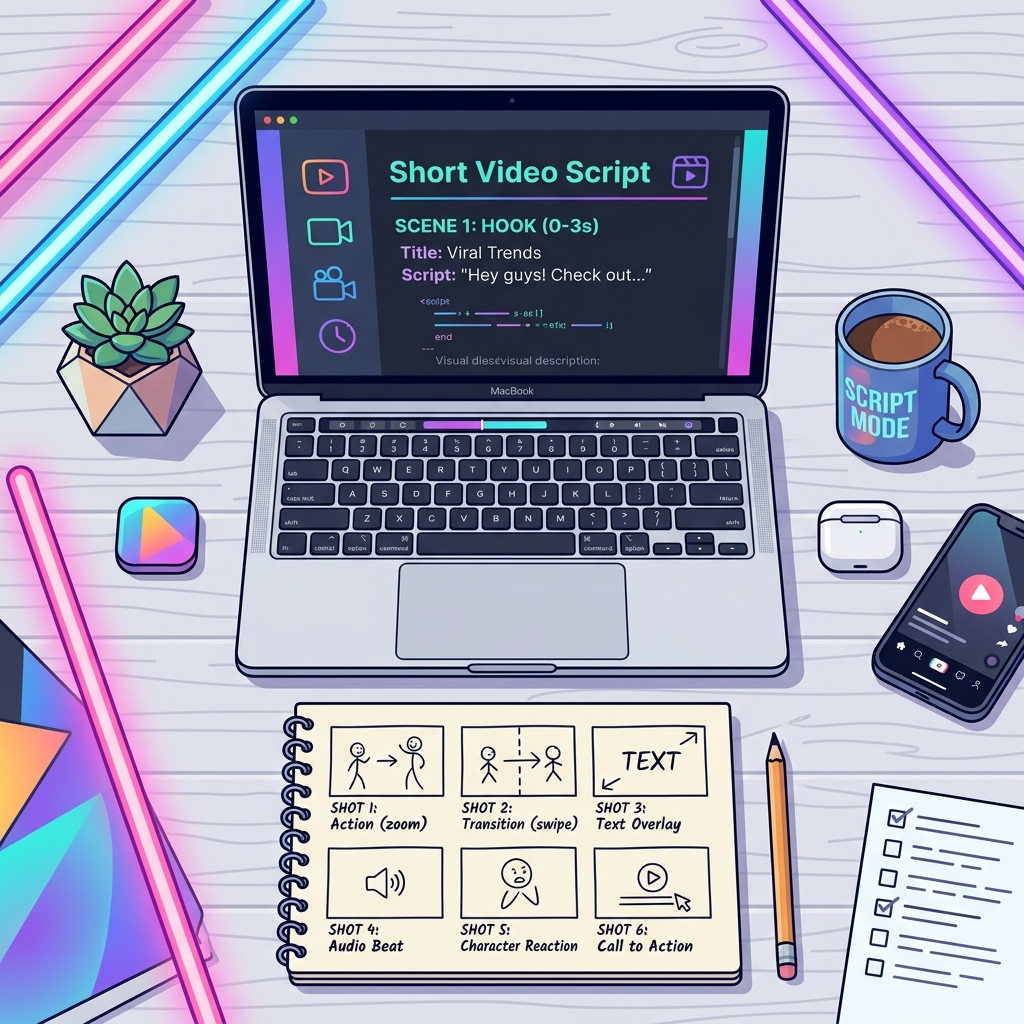
- Write Visual Cues: Next to your text, write notes on what should be happening on the screen (e.g., [Zoom in on phone screen], [Sound effect: swoosh]). This makes the editing process much easier and ensures your visuals align with your speech.
Conclusion
Great editing cannot save a poorly structured script, but a solid script will shine even with simple editing. By spending an extra 10 minutes planning your words and structuring your hooks, you will create content that keeps viewers glued to their screens. Happy scripting!